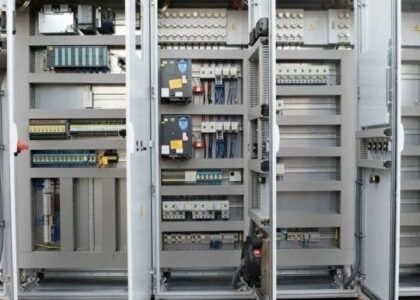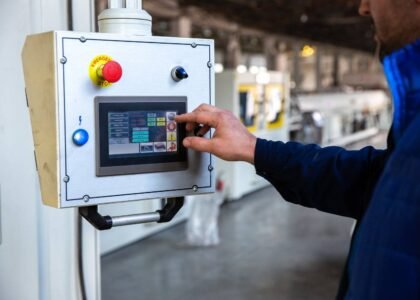
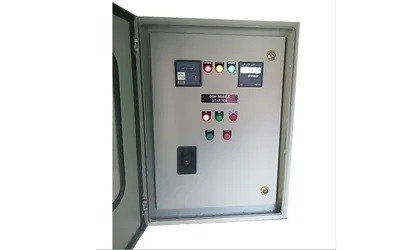
Electrical control panels are essential for managing and controlling electrical equipment across industrial and commercial facilities. Electrical Control Panel Manufacturers in Delhi design these panels to provide safe, organized, and efficient control of electrical systems. From motor control and automation to power distribution, a properly designed control panel helps improve operational reliability and safety.
What Is an Electrical Control Panel?
An electrical control panel is a housing that has electrical parts needed for controlling, monitoring, and distributing power to various machines or systems. It acts as a central control point between incoming electrical power and connected equipment.
Depending on the application areas, panels can be designed for motor control, automation, process control, power distribution, or machine operations. Electrical Control Panel Manufacturers in Delhi create solutions according to the voltage, load-carrying capacity, control functions, and environment of the machine or system.
For more information, chat with us directly on WhatsApp.
Key Components of an Electrical Control Panel
A control panel comprises multiple elements that are collectively operated by a control system. Some of the commonly used components include:
1. Circuit Breakers
Circuit breakers protect electrical circuits from overcurrent and short-circuit conditions. They can disconnect the power supply when abnormal electrical conditions occur.
2. Contactors and Relays
Contactors are commonly used for switching motors and other high-power loads. Relays help control electrical circuits and provide switching functions based on specific control signals.
3. Motor Starters
Motor starters regulate the starting and stopping of motors. They can also provide protection against overload conditions, helping improve motor safety and performance.
4. PLC and Automation Components
Programmable Logic Controllers (PLCs) are used in automated systems to control machines and industrial processes. PLC-based panels can manage sequences, sensors, actuators, and other automation functions.
5. Human-Machine Interface
An HMI allows operators to monitor system parameters and control connected machinery through a user-friendly interface. It can display information such as operating status, alarms, temperatures, and production data.
6. Busbars and Terminal Blocks
Busbars distribute electrical power within the panel, while terminal blocks provide organized connection points for field wiring. Proper arrangement helps simplify installation and maintenance.
Functions of Electrical Control Panels
The main purpose of an electrical control panel is to perform centralized control of the electrical equipment. However, modern panels can perform several additional functions.
Electrical Control Panel Manufacturers in Delhi can design panels for power distribution, motor control, automation, equipment protection, and process monitoring. These functions help operators manage machinery while maintaining better control over electrical operations.
Control panels can also help reduce wiring complexity. Instead of having separate control arrangements for different machines, multiple functions can be integrated into one properly engineered enclosure.
Types of Electrical Control Panels
Different industrial requirements call for different types of control panels. Common examples include:
- Motor Control Panels: Used for controlling and protecting motors.
- PLC Control Panels: Designed for automated industrial processes.
- Power Control Panels: Used for controlling and distributing electrical power.
- Automatic Power Factor Control Panels: Used to manage power factor correction.
- MCC Panels: Used for centralized motor control in industrial facilities.
- Machine Control Panels: Designed for specific machinery and production equipment.
The selection depends on the connected load, application, control requirements, environmental conditions, and future expansion needs.
Applications of Electrical Control Panels
Electrical control panels are used across a wide range of industries. Manufacturing plants, water treatment facilities, commercial buildings, infrastructure projects, process industries, and automation systems all rely on control panels.
In manufacturing environments, panels can control motors, conveyors, pumps, compressors, and automated machinery. In building services, they can support HVAC systems, pumps, and other electrical equipment.
Experienced Electrical Control Panel Manufacturers in Delhi can design specialized panels for particular applications and needs.
Why Proper Panel Design Matters
A well-designed control panel should provide electrical safety, easy maintenance, efficient wiring, and reliable operation. Component selection must consider the electrical load, fault levels, enclosure requirements, temperature, and operating conditions.
Electrical Control Panel Manufacturers in Delhi also need to consider panel layout and accessibility. Proper spacing between components can support heat management and make inspection or maintenance easier.
Clear labeling and organized wiring are equally important. They can help technicians quickly identify components and connections during troubleshooting and maintenance.
Choosing Electrical Control Panel Manufacturers in Delhi
When selecting Electrical Control Panel Manufacturers in Delhi, businesses should consider technical expertise, manufacturing capabilities, component quality, customization options, and testing procedures.
Manufacturers should understand the application’s electrical requirements before recommending a panel configuration. Documentation, wiring diagrams, testing, and quality checks can also contribute to dependable panel performance.
For specialized industrial applications, Electrical Control Panel Manufacturers in Delhi can offer customized solutions that match specific power, automation, and control needs.
Conclusion
Electrical control panels provide a structured way to control, protect, and monitor electrical equipment. Their components, configuration, and applications can be tailored to the requirements of every industrial or commercial system.
Selecting experienced Electrical Control Panel Manufacturers in Delhi can enable companies to acquire panels designed to their particular electrical loads, automation needs, safety considerations, and operating conditions. Proper engineering and component selection are key to achieving reliable and efficient electrical control.
Frequently Asked Questions
What is the main purpose of an electrical control panel?
An electrical control panel provides centralized control, monitoring, protection, and distribution functions for electrical equipment and industrial systems.
What components are commonly used in control panels?
Common components include circuit breakers, contactors, relays, motor starters, PLCs, HMIs, busbars, terminal blocks, and protection devices.
Where are electrical control panels used?
They are widely used in manufacturing, automation, water treatment, infrastructure, commercial buildings, process industries, and machinery applications.
Can electrical control panels be customized?
Yes. Control panels can be customized according to voltage, load capacity, control requirements, automation systems, enclosure specifications, and the intended application.
What should I consider when choosing control panel manufacturers?
Consider technical expertise, customization capabilities, component quality, panel design, testing procedures, documentation, and experience with similar industrial applications.
For more information about VHCPL Automation India Pvt. Ltd., visit https://share.google/aBZAw2Sv0L83sWoFm to learn more about their services or to book an appointment.